




Scaffolding City; Architectural Utopia of the Future Past
Scaffolding City; Architectural Utopia of the Future Past
By Edward Dodington

The Need for Speed Our current model of architecture is too slow. It is too slow to respond to global ecological and economic crisis alike. We need a faster system. One that can quickly adapt, bend, strategically buckle, and rebuild. The trend has been moving in the direction of increasing speed -- it just needs to get faster.
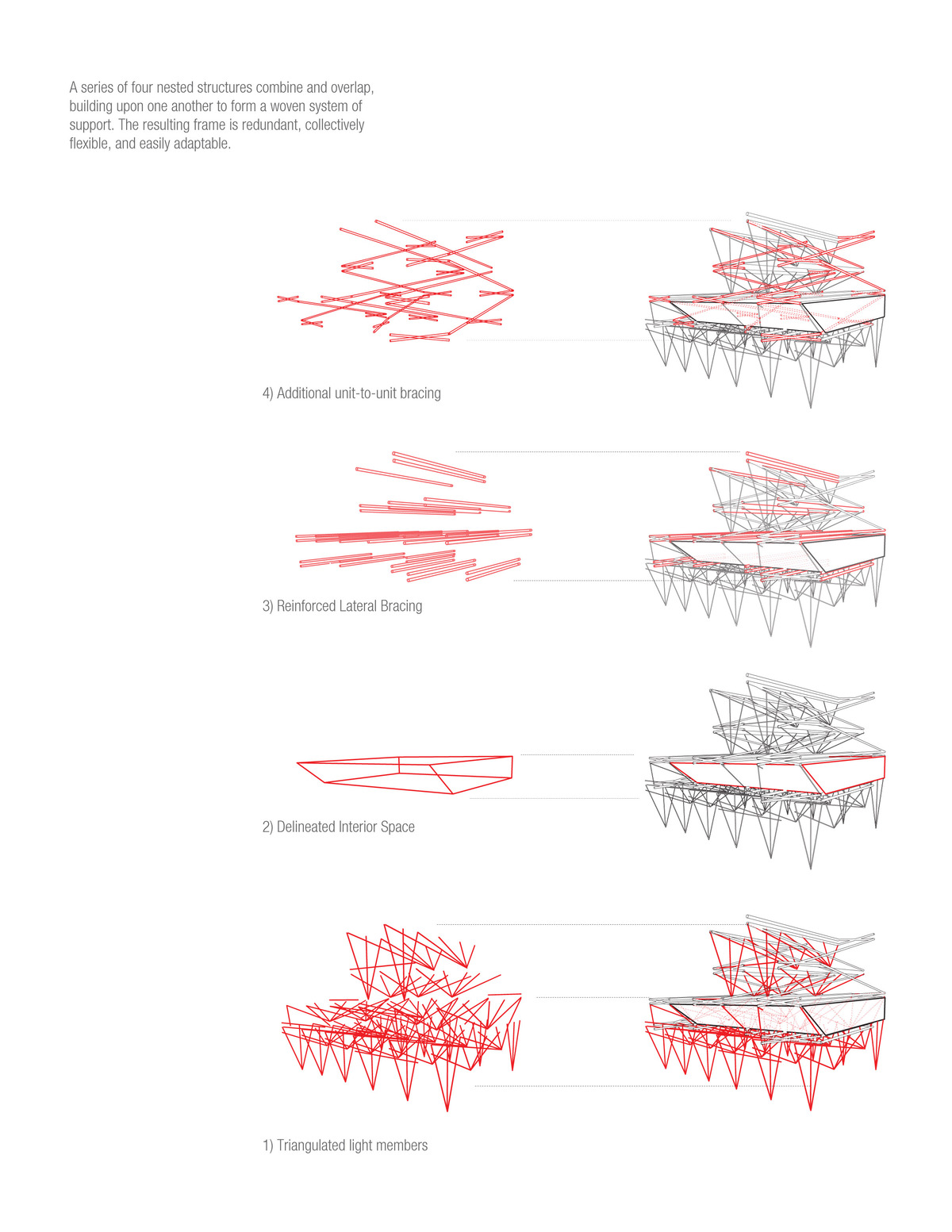
Redundancy The new ethos is for designers to embrace change and flexibility -- unknowns will remain unknown and new unknowns will be discovered. To design for eventual and partial failure is more realistic than an “impervious” or materially efficient design.

Network the System The development plan of the city will rely not on a strict plan but on access and proximity to resources, local economic conditions and ecology. This will be a dynamic system of planning, free to move from location to location.

Open to Economy Incentivize use. Keep material costs low and the system will generate innovative uses and techniques. People will re-interpret materials, re-invent uses and develop secondary and tertiary economies surrounding the transfer and transformation of materials.

Democratize the Construction Process and lower the level of specialized construction knowledge. Each citizen can become a contractor, and thereby become an active member of a growing system.

Open to Ecology The new architectural city will be easily accessible and amenable to other animals for civic habitation. Its openness will take advantage of ecological assets, getting stronger as it is incorporated into a living thicket of trees or gathering thicker as populations of birds and animals make it their homes.

2044 Comments – Login to comment
prestigegoldengrove111111 · Jun 2, 26 7:36 am
prestigegoldengrove111111 · Jun 2, 26 7:39 am
duckytips · Jun 27, 26 4:19 am
To naprawd? przydatna i dobrze przygotowana publikacja dla kierowców, którzy chc? podej?? do zimy spokojnie, a nie przypomina? sobie o samochodzie dopiero wtedy, gdy rano nie da si? go uruchomi?. Artyku? „35 porad, jak przygotowa? samochód do zimy. Pe?na checklista przed mrozami” spe?nia swoj? rol?, bo nie jest tylko krótk? list? oczywistych hase? typu „zmie? opony” i „sprawd? akumulator”. Autor przechodzi przez temat szerzej i pokazuje, ?e zimowe przygotowanie auta to zestaw wielu drobnych kontroli, które razem wp?ywaj? na bezpiecze?stwo, komfort i koszty eksploatacji.
Najwi?ksz? zalet? tekstu jest praktyczny uk?ad. Czytelnik mo?e potraktowa? go jak checklist? i punkt po punkcie sprawdzi? w?asne auto: opony, akumulator, ?wiece ?arowe, filtr paliwa, p?yny, olej, hamulce, ?wiat?a, ogrzewanie, klimatyzacj?, nawiewy, wycieraczki, uszczelki, zamki, zawiasy, odp?ywy, nadwozie oraz wyposa?enie baga?nika. To wa?ne, bo wiele osób skupia si? tylko na oponach, a potem zim? problemem okazuje si? zamarzni?ty p?yn do spryskiwaczy, s?aby akumulator, zaparowane szyby albo brak kabli rozruchowych.
Podoba mi si? równie? prosty j?zyk i konkretne wyja?nienia, po co wykonywa? dan? czynno??. Nie ma tu sztucznego komplikowania tematu, ale nie ma te? zbyt du?ego skracania. Szczególnie przydatne s? fragmenty o p?ynie ch?odniczym, p?ynie hamulcowym, zabezpieczeniu uszczelek silikonem, czyszczeniu odp?ywów i przygotowaniu zimowego zestawu w baga?niku. To s? rzeczy, o których wielu kierowców zapomina, dopóki nie pojawi si? awaria albo niewygodna sytuacja na mrozie.
Dobrze wypada te? ko?cowa cz??? dotycz?ca jazdy zim?. Nawet dobrze przygotowany samochód nie zast?pi ostro?no?ci kierowcy. Wi?kszy dystans, spokojne hamowanie i unikanie gwa?townych ruchów s? zim? równie wa?ne jak sprawne hamulce czy dobre opony. Ca?o?? oceniam jako u?yteczny poradnik przed sezonem zimowym. Warto go przeczyta? wcze?niej i wróci? do niego przed pierwszymi mrozami.
Pe?na wersja artyku?u znajduje si? tutaj:
https://duckytips.com/pl/porady/35-porad-jak-przygotowac-samochod-do-zimy-pelna-checklista-przed-mrozami/
duckytips · Jun 27, 26 4:21 am
Der Artikel „35 Tipps, wie man das Auto auf den Winter vorbereitet. Vollständige Checkliste vor dem Frost“ ist ein sehr nützlicher und übersichtlich aufgebauter Ratgeber für alle Autofahrer, die ihr Fahrzeug rechtzeitig vor der kalten Jahreszeit kontrollieren möchten. Besonders positiv fällt auf, dass der Text nicht nur die üblichen Standardpunkte wie Winterreifen und Batterie erwähnt, sondern das Thema deutlich breiter betrachtet. Dadurch entsteht eine vollständige Checkliste, die man vor dem ersten Frost Schritt für Schritt durchgehen kann.
Gut gelungen ist die klare Struktur. Der Leser findet konkrete Hinweise zu Winterreifen, Reifendruck, Batterie, Glühkerzen, Kraftstofffilter, Diesel-Fließverbesserer, Frostschutzmittel, Motoröl, Bremsanlage, Bremsflüssigkeit, Scheibenwaschflüssigkeit, Scheibenwischern und Beleuchtung. Gerade diese Kombination ist wichtig, weil viele Winterprobleme nicht durch einen einzigen großen Defekt entstehen, sondern durch mehrere kleine Schwachstellen, die bei Kälte plötzlich sichtbar werden. Ein schwacher Akku, alte Wischerblätter, Sommer-Scheibenwaschflüssigkeit oder verschlissene Reifen können im Alltag schnell zu gefährlichen oder zumindest sehr unangenehmen Situationen führen.
Ein weiterer Vorteil des Artikels ist die praktische Sprache. Die Empfehlungen sind verständlich formuliert und erklären nicht nur, was man prüfen sollte, sondern auch warum es wichtig ist. Besonders hilfreich sind die Hinweise zu Dichtungen, Schlössern, Scharnieren und Wasserabläufen. Diese Punkte werden oft vergessen, obwohl sie im Winter große Probleme verursachen können. Festgefrorene Türen, vereiste Schlösser oder Wasser in Karosseriehohlräumen sind typische Dinge, an die man erst denkt, wenn es schon zu spät ist.
Sehr sinnvoll ist auch der Abschnitt zum Winterset im Kofferraum. Eiskratzer, Schneebürste, kleine Schaufel, Abschleppseil, Taschenlampe, Starthilfekabel, Handschuhe, Decke und Ladegerät gehören tatsächlich zu den Dingen, die man im Winter besser vorher bereitlegt. Der Artikel erinnert daran, dass Vorbereitung nicht nur in der Werkstatt stattfindet, sondern auch im Alltag des Fahrers.
Insgesamt ist der Beitrag ein praktischer, gut lesbarer und vollständiger Leitfaden für die Wintervorbereitung des Autos. Er eignet sich sowohl für Fahranfänger als auch für erfahrene Fahrer, die vor dem Winter nichts vergessen möchten. Besonders nützlich ist, dass man den Text direkt als Kontrollliste verwenden kann.
Den vollständigen Artikel findet man hier:
https://duckytips.com/de/tipps/35-tipps-wie-man-das-auto-auf-den-winter-vorbereitet-vollstaendige-checkliste-vor-dem-frost/
duckytips · Jun 27, 26 4:22 am
L’articolo “15 luoghi turistici poco conosciuti degli Stati Uniti da vedere” è una selezione molto interessante per chi vuole scoprire gli Stati Uniti oltre i soliti itinerari più famosi. Non parla dei luoghi già presenti in ogni guida turistica, ma propone destinazioni meno scontate, spesso vicine a grandi città o aeroporti, che possono essere inserite facilmente in un viaggio anche senza organizzare una lunga spedizione. Questo è uno dei punti più forti del testo: le località non sembrano scelte solo perché sono belle, ma anche perché sono realistiche da visitare.
La lista è varia e ben costruita. Ci sono canyon, cascate, giardini, parchi urbani, riserve naturali, monumenti storici, paludi, foreste e luoghi panoramici. Questa varietà rende l’articolo utile per tipi diversi di viaggiatori. Chi ama i paesaggi rocciosi può trovare mete come Red Rock Canyon, Garden of the Gods o Watkins Glen State Park. Chi preferisce luoghi più tranquilli e verdi può interessarsi a Cuyahoga Valley National Park, Middlesex Fells Reservation o Forest Park. Per chi viaggia in città e vuole aggiungere una pausa nella natura, sono particolarmente interessanti Falls Park on the Reedy, Papago Park o Kubota Garden.
Mi piace anche il fatto che ogni destinazione venga descritta non solo dal punto di vista visivo, ma anche pratico. L’articolo spiega cosa vedere, quanto può essere comoda la visita, quali sono gli elementi principali del luogo e, in molti casi, come inserirlo in un itinerario. Questo rende il testo più utile di una semplice classifica fotografica. Non si limita a dire “questo posto è bello”, ma aiuta il lettore a capire se vale davvero la pena aggiungerlo al proprio viaggio.
Un altro aspetto positivo è l’equilibrio tra natura, storia e accessibilità. Alcuni luoghi hanno un forte valore paesaggistico, altri raccontano pezzi importanti della storia americana, altri ancora funzionano bene come brevi deviazioni vicino a città molto visitate. Per questo motivo la selezione può essere utile sia a chi sta preparando un primo viaggio negli Stati Uniti, sia a chi ha già visto le mete principali e cerca qualcosa di più originale.
Nel complesso, è un articolo pratico, piacevole da leggere e ricco di spunti concreti. La cosa migliore è che dà idee realistiche: posti belli, ma non necessariamente complicati da raggiungere o da inserire in un programma di viaggio. È una guida adatta a chi vuole rendere un itinerario negli Stati Uniti più personale, meno turistico e più vario.
Articolo completo:
https://duckytips.com/it/viaggi/15-luoghi-turistici-poco-conosciuti-stati-uniti-da-vedere-2/
carlosluca · Jul 20, 26 6:35 am
I recently decided to try an assignment">https://www.quickassignmenthub.com/">assignment help service after struggling to manage multiple deadlines, and it turned out to be a great decision. The guidance I received helped me understand difficult concepts, improve my research, and structure my assignments more effectively. Instead of feeling stressed, I became more confident in completing my coursework on time. I also learned valuable academic writing techniques that I continue to use in my studies. For anyone feeling overwhelmed with university work, assignment help can provide useful support, save time, and make the learning process much more manageable and rewarding.gurgaonservice · Jul 31, 26 5:26 am
Title: Gurgaon Escorts Service – Verified Listings 2026 Description: Browse verified Gurgaon escorts directory with Russian, independent & VIP profiles across all major zones. No advance payment, 100% privacy. Available 24×7. Source: https://gurgaonescortsservice.com/
gurgaonservice · Jul 31, 26 5:26 am
himanshurao · Aug 21, 26 2:02 am
https://uniquethis.com/sobhaoneeee?tab=100027185https://tiltify.com/@sobhaonee/profile
https://www.codewars.com/users/sobhaonee
https://vcard.link/card/IGOe
himanshurao · Aug 21, 26 2:05 am
https://app.scholasticahq.com/scholars/544267-sobha-one-worldhttps://de.files.fm/wsobhaone
himanshurao · Aug 21, 26 2:08 am
https://www.anibookmark.com/user/nambigreen.htmlhimanshurao · Aug 21, 26 2:10 am
https://sciencemission.com/profile/nambigreenhttps://www.addonbiz.com/listing/banglore-nambigreen/
himanshurao · Aug 21, 26 2:14 am
https://novel.daysneo.com/author/presstree/https://www.checkli.com/presstreehttps://bitq.link/presstree
himanshurao · Aug 21, 26 2:17 am
https://hubhopper.com/podcast/prestige-park-street/487248
https://doc.aquilenet.fr/s/z6zLrobQu
himanshurao · Aug 21, 26 2:45 am
himanshurao · Aug 21, 26 2:48 am
himanshurao · Aug 22, 26 3:13 am
himanshurao · Aug 22, 26 3:17 am
himanshurao · Aug 22, 26 3:45 am
himanshurao · Aug 22, 26 3:49 am
https://www.plotaroute.com/userprofile/688255https://hoo.be/presavo
https://www.gta5-mods.com/users/presavo
https://monopinion.namur.be/profiles/presavo/activity
https://codoc.jp/sites/presavo/entries/OqmdylglZQ
https://www.sandiegoreader.com/users/presavo/
https://digiphoto.techbang.com/users/presavo
himanshurao · Aug 22, 26 3:54 am
https://profile.hatena.ne.jp/pressouth/
https://dashing-fox-00b0a1.netlify.app/
joewilljacks · Aug 26, 26 4:18 am
joewilljacks · Aug 26, 26 4:18 am
joewilljacks · Aug 26, 26 4:18 am
joewilljacks · Aug 26, 26 4:18 am
joewilljacks · Aug 26, 26 4:18 am
joewilljacks · Aug 26, 26 4:18 am
joewilljacks · Aug 28, 26 1:24 pm
himanshurao · Sep 4, 26 12:16 am
https://penzu.com/p/7d63b874744819bfhttps://orpetron.com/user/sobhaonee
himanshurao · Sep 4, 26 12:17 am
https://md.bytewerk.org/s/Fmh6sf94Sw
himanshurao · Sep 4, 26 2:11 am
https://hype4.academy/profile/nambigreenhttps://unit.link/nambigreen
himanshurao · Sep 4, 26 2:13 am
https://bit.cloud/nambiarbeverlygreen
https://hype4.academy/profile/nambigreen
himanshurao · Sep 4, 26 3:47 am
https://lhub.to/springwoohttps://longbets.org/user/springwoo/
https://idol.st/user/226260/springwoo/
https://www.cardanocube.com/community/springwoo
himanshurao · Sep 4, 26 3:49 am
https://circle-book.com/circles/78715https://ticketme.io/en/account/springwoo
https://tsunagu.cloud/users/springwoo
http://www.genina.com/user/edit/5583347.page
himanshurao · Sep 5, 26 1:31 am
https://tripawds.circle.so/u/07d4483dhttps://www.murfreesborovoice.com/users/sobhaone
https://mobilizon.picasoft.net/@sobha_one_world
https://solo.to/sobhaone
https://www.bmwpower.lv/user.php?u=sobhaonnee
https://notepad.rhizome.org/s/CngfaU4Ry
himanshurao · Sep 5, 26 1:33 am
http://taniecirlandzki.phorum.pl/profile.php?mode=viewprofile&u=17919https://insightmaker.com/insight/6LNUHA2VjjPh0NFR01Svr7/Sobha-One-World
https://www.powderproject.com/club/7000276/sobha-one-world
https://tripawds.circle.so/u/07d4483d
himanshurao · Sep 5, 26 2:36 am
himanshurao · Sep 5, 26 2:38 am
https://md.linksjugend-solid.de/s/NHkO3nPJChimanshurao · Sep 5, 26 3:41 am
https://www.photoback.jp/Stage/Author/1012543https://illumy.cc/presstree/profile/
https://artrepreneur.com/p/presstree
himanshurao · Sep 5, 26 3:45 am
https://onlinesequencer.net/forum/user-308174.htmlhttps://doselect.com/@a986ff941a2d830970c3e62f5
https://openprofile.dev/profile/presstree
https://bbs.mofang.com.tw/home.php?mod=space&uid=2649706
https://www.photoback.jp/Stage/Author/1012543
mamtapandy · Oct 12, 26 1:25 am
mamtapandy · Oct 12, 26 1:25 am
mamtapandy · Oct 12, 26 1:25 am
mamtapandy · Oct 12, 26 1:26 am
BRACKET [goes soft]
iMobile
By A Jennifer Siegal Company
ShapeShift
By Manuel Kretzer, Edyta Augustynowicz, Sofia Georgakopulou, Dino Rossi, Stefanie Sixt
Anticipatory Architecture: Reyner Banham and Technological Futurism in Postwar and Contempoary Desig
By Chris Perry
City Tickets
By Mayo Nissen
Chicago Institute of Land Generation
By Stewart Hicks, Allison Newmeyer
The Bladders
By Jonathan Walker
Weather Station
By Anca Matyiku
Dredge Locked
By Alex Yuen
GROUNDING: Landslide Mitigation Housing
By Jared Winchester, Viktor Ramos
Buoyant Light
By Claire Lubell, Virginia Fernandez
ESP // Estuary Services Pipeline
By Bionic- Marcel Wilson
Of Pop and Prostheses: Vienna 1965-72
By Jon Cummings
Operation "Hello Eden"
By Fionn Byrne
SWAMP THING
By Alex Chew, Max Kuo, Danielle Wagner
Aqua_Dermis: A Proposal for Climate Adaptive Comfort
By Mariela De Felix
Arctic Opening
By Fabric | Ch - Office For Architecture, Interaction & Research
SOFT HOUSE
By KVA MATx, MIT SOFT CITIES Research, Jan Knippers/ King Advanced Engineering, ILEK Stuttgart, Buro Happold And A Consortium Of European Building Industry Partners
Landscapes of co-option: soft power and the environmental turn in corporate America
By Dan Handel
The Soft Energy Controversy
By Rania Ghosn
SURVEILLER ET DIVERTIR _ Discipline and entertain
By Pietro Pezzani