




#OurChangingClimate, participant posts
#OurChangingClimate
By Brett Snyder and N. Claire Napawan
Similarly invisible, is climate change itself.
Revealing our connections to the environment, to shared resources, and to climate change impacts are key to understanding ways in which we might address long term vulnerabilities. More importantly, sharing these connections becomes critical to building supportive communities. Consider #OccupySandy of 2012: The tools for sharing information that were originally developed for the #OccupyWallStreet movement were quickly adapted to simultaneously reveal connections to resources (food, water, medication) and to environmental hazards (transit closures, flooding, downed power lines). This network of sharing via social media became one of the most successful disaster relief efforts in the United States.[1]
So how do we build climate resilience through sharing?
Climate change is a largely invisible and long-term catastrophe in the making.[2] The first step to building capacity to respond is to acknowledge its presence in our lives. While we may not be able to see climate change, we can see how our built environments might be susceptible to its projected impacts. #OurChangingClimate is an effort to do just that, by broadening and diversifying how we understand climate change and who gets to participate in the conversation. Working with some of the most vulnerable communities in California, including youth and youth of color, the project encourages participants to share personal experiences related to climate change. Through workshops (first held in Oakland in 2015) the climate conversation is re-scaled and re-focused to connect to youth interests.[3] Youth participants are encouraged to share their observations through their existing social media networks. This sharing can instigate awareness of not only the impacts on an individual, but the impact an individual might have. Preliminary #OurChangingClimate content has explored connections such as the ones between food choices and fossil fuels, and many participants use the network to share more ‘climate-friendly’ practices. Thus, the network becomes a place to make daily actions visible, creating the possibility of agency between individuals and shared resources.
Sharing community-based experiences of climate change creates more actionable environments. It can provide designers and decision-makers with more nuanced and up-to-date understandings of communities. Participants can highlight persistent conditions that require addressing (e.g. a clogged storm drain or over-crowded public transit). Similarly, under-explored resources can be identified and shared more readily within a community (e.g. a home gardener’s bumper crop or medical clinic hours of operation). In times of extreme climate emergencies, these same networks can share real-time, geolocated information on important resources, evacuation routes, and/or hazardous sites.
Sharing personal stories of climate change has the possibility to change the larger narrative of adaptation by building personal stake one share at a time.
Foot Notes:
1. “Within hours of Sandy’s landfall, members from the Occupy Wall Street movement used social media to tap the wider Occupy network for volunteers and aid. Overnight, a volunteer army of young, educated, tech-savvy individuals with time and a desire to help others emerged. In the days, weeks, and months that followed, “Occupy Sandy” became one of the leading humanitarian groups providing relief to survivors across New York City and New Jersey. At its peak, it had grown to an estimated 60,000 volunteers—more than four times the number deployed by the American Red Cross.” From Eric Ambinder and David M. Jennings. “The Resilient Social Network.” A Report from the Homeland Security Studies and Analysis Institute (2013): 4.
2. Long time frames of projected impacts, and the physical distance between many Americans and the sites of some of the more catastrophic climate-related events, are often too great to make the issues feel relevant to them. From Gilbert, D. 2006. “If only gay sex caused global warming.” In The Los Angeles Times. 2 July 2006, p. 14.
3. Engaging with existing interests, framing positive messages, and employing trusted peer messengers is the key to motivating youth towards climate action. From Corner, A., O. Roberts, S. Chiari, S. Voller, E. Mayrhuber, S. Mandl, and K. Monson. 2015. “How do young people engage with climate change? The role of knowledge, values, message framing, and trusted communicators,” WIREs Climate Change, 6: 523-534.
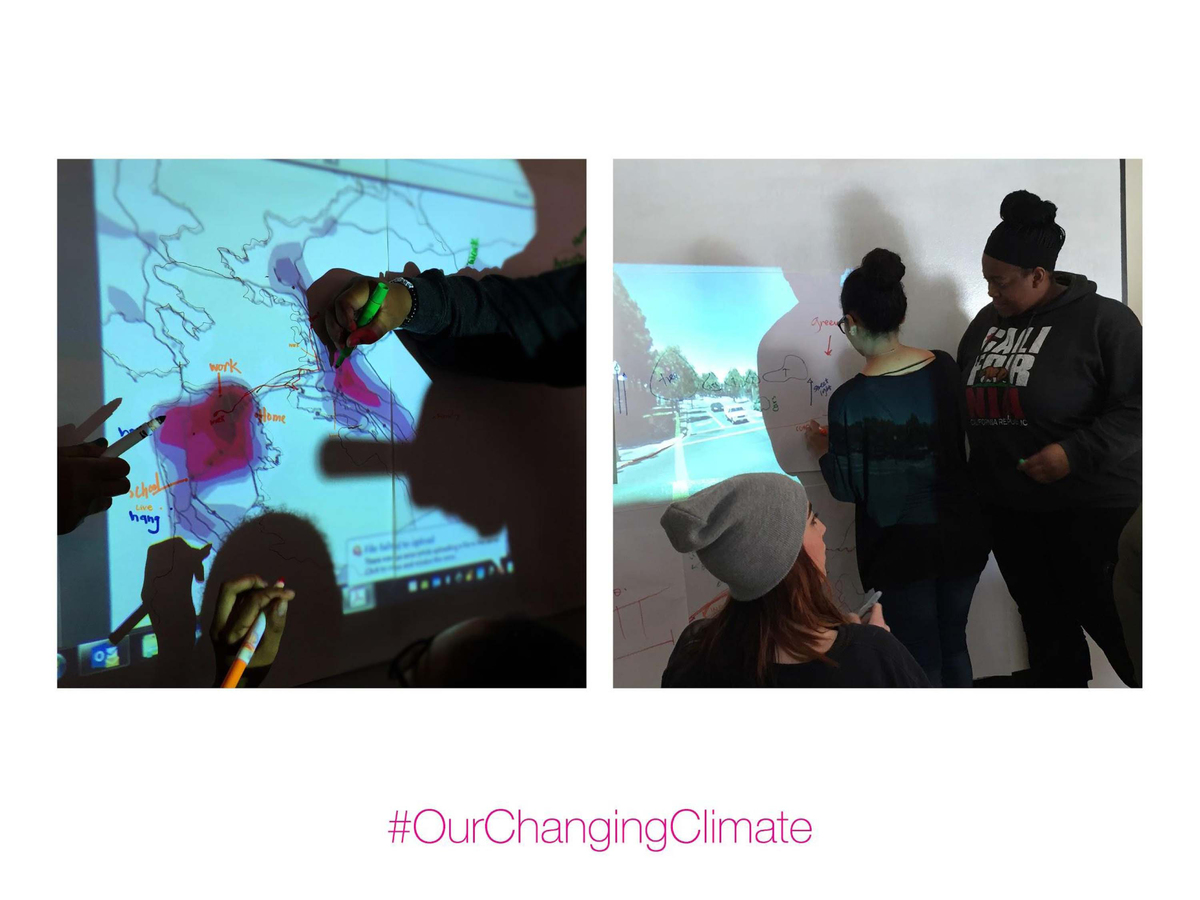
#OurChangingClimate, pilot workshops

#OurChangingClimate, digital scavenger hunt

#OurChangingClimate, food-related posts

#OurChangingClimate, California resilience map and workshop locations

#OurChangingClimate, juxtaposing resilience map and water-related posts in the San Francisco Bay Area


551 Comments – Login to comment
nofilabbasi · Aug 9, 26 6:59 am
The article demonstrates a strong understanding of the topic while presenting information in a clear and accessible manner. koitotoabeermalik · Aug 9, 26 12:01 pm
Menurut saya, informasi di artikel ini cukup membantu bagi pengguna yang sedang mencari panduan terkait rajabandot login. Penjelasannya mudah dipahami dan bisa menjadi referensi bagi pengguna baru. rajabandot loginabeermalik · Aug 11, 26 7:56 am
I found your this post while searching for some related information on blog search...Its a good post..keep posting and update the information. situs slotabbasishb · Aug 14, 26 9:33 am
nofilabbasi · Aug 14, 26 5:55 pm
Excellent .. Amazing .. I’ll bookmark your blog and take the feeds also…I’m happy to find so many useful info here in the post, we need work out more techniques in this regard, thanks for sharing. slot88nofilabbasi · Aug 17, 26 10:04 am
I appreciate the effort invested in creating content that is both educational and highly engaging. situs gacorabeermalik · Aug 18, 26 5:41 am
Temukan informasi lengkap seputar toto macau dengan pembahasan praktis, referensi digital, dan panduan yang mudah dipahami untuk pembaca Indonesia. toto macauabeermalik · Aug 19, 26 7:39 am
Great work creating content that balances detailed analysis with accessibility and reader engagement. bandar slotnofilabbasi · Aug 22, 26 5:10 pm
The explanations throughout the discussion are clear and effective, making important ideas easier to comprehend.situs gacorabeermalik · Aug 25, 26 10:00 am
Pembahasan mengenai iblbet daftar juga disampaikan secara ringkas sehingga mudah dipahami. iblbet daftaralihamza11 · Sep 2, 26 9:37 am
I will really appreciate the writer's choice for choosing this excellent article appropriate to my matter.Here is deep description about the article matter which helped me more. toto macauabeermalik · Sep 5, 26 7:10 am
Rajabandot menghadirkan ruang digital dengan konsep yang ringkas dan terorganisir, memadukan kemudahan navigasi, tampilan adaptif, serta akses yang nyaman bagi pengguna. togel online terpercayaabeermalik · Sep 6, 26 7:41 am
Slot menghadirkan konsep hiburan digital yang interaktif dengan tampilan dinamis, navigasi sederhana, serta desain responsif yang nyaman diakses melalui berbagai perangkat. demo slot terbaruabeermalik · Sep 7, 26 6:56 am
I am very enjoyed for this blog. Its an informative topic. It help me very much to solve some problems. Its opportunity are so fantastic and working style so speedy. free stressertechmatrite · Sep 7, 26 8:11 am
Interesting post. I Have Been wondering about this issue, so thanks for posting. Pretty cool post.It 's really very nice and Useful post.Thanks free ip stresserabeermalik · Sep 7, 26 10:00 am
Rajabandot menawarkan suasana digital yang modern dengan struktur halaman yang rapi, fitur yang mudah dijelajahi, serta pengalaman penggunaan yang konsisten di perangkat mobile maupun desktop. toto macausigma · Sep 8, 26 6:34 am
hello!! Very interesting discussion glad that I came across such informative post. Keep up the good work friend. Glad to be part of your net community. situs totoabeermalik · Sep 8, 26 8:11 am
i read a lot of stuff and i found that the way of writing to clearifing that exactly want to say was very good so i am impressed and ilike to come again in future.. situs totonofilabbasi · Sep 8, 26 9:14 am
This post offers valuable perspectives that help readers stay informed about evolving opportunities and challenges. slot gacorabeermalik · Sep 17, 26 8:23 am
Artikel ini memberikan wawasan yang cukup jelas bagi pembaca internet. Penjelasan mengenai slot gacor terasa informatif dan membantu memahami topik secara lebih objektif. slot gacorsigma · Sep 18, 26 6:28 pm
This post stands out because it explains important concepts effectively while maintaining a professional and approachable tone. Poker88 Daftarmohammadbilalkhatri · Sep 20, 26 4:28 am
Three are usually cheap Ralph Lauren available for sale each and every time you wish to buy. SmartPostsabeermalik · Sep 20, 26 5:12 am
Bagian mengenai link slot juga cukup jelas, jadi mudah mengikuti informasi yang disampaikan. link slotabeermalik · Sep 22, 26 8:31 am
Pembahasan mengenai raja bandot juga terasa relevan bagi pembaca yang ingin memahami topik secara lebih baik. raja bandotjamessmith11111111111111111111 · Sep 27, 26 2:14 am
This web page may be a walk-through like the knowledge you wished about it and didn’t know who to ask. Glimpse here, and you’ll definitely discover it.?? ott ??jamessmith11111111111111111111 · Sep 28, 26 1:02 pm
This provides a helpful way to look at the subject. The focus on interview preparation is particularly useful. It is helpful to see the topic explained in a practical way. Thanks for sharing these insights.Cv">https://www.geniescareerhub.com/blogs/cv-review-service-uk">Cv review service UKabeermalik · Sep 29, 26 6:49 am
Informasi tentang toto cukup menarik dan mudah dipahami. Penjelasannya membantu pembaca mendapatkan wawasan baru mengenai topik yang dibahas. totoabeermalik · Sep 29, 26 7:35 am
Artikel yang menarik untuk dibaca. Informasi mengenai data macau disampaikan dengan cukup jelas dan memberikan perspektif tambahan bagi pembaca. data macauabeermalik · Oct 3, 26 7:11 am
Kehadiran rajabandot di dalam pembahasan membuat informasi terasa relevan bagi pembaca internet masa kini. rajabandotabeermalik · Oct 3, 26 9:28 am
Kehadiran rajabandot di dalam pembahasan membuat informasi terasa relevan bagi pembaca internet masa kini. rajabandotabeermalik · Oct 5, 26 9:24 am
Tulisan ini sangat bermanfaat bagi pembaca digital karena membahas topik secara terstruktur. Penjelasan tentang situs toto juga terasa relevan dan menambah informasi baru bagi pembaca. situs totoabeermalik · Oct 5, 26 10:52 am
Penjelasan mengenai rajabandot di tengah pembahasan juga membuat topik terasa lebih relevan bagi pembaca. rajabandotmohammadbilalkhatri · Oct 6, 26 8:08 am
wow, great, I was wondering how to cure acne naturally. and found your site by google, learned a lot, now i’m a bit clear. I’ve bookmark your site and also add rss. keep us updated. Let's talkjamessmith11111111111111111111 · Oct 7, 26 3:22 pm
steam cleaners can clean lots of dirty clothes in a very short period of time that is why i always prefer to use them.,slot">https://baysidekitchens.com/kitchen-remodeling/">slot gacormohammadbilalkhatri · Oct 8, 26 5:24 am
This is a good post. This post gives truly quality information. I’m definitely going to look into it. Really very useful tips are provided here. Thank you so much. Keep up the good works Apinagamohammadbilalkhatri · Oct 8, 26 5:27 am
I recently came across your article and have been reading along. I want to express my admiration of your writing skill and ability to make readers read from the beginning to the end. I would like to read newer posts and to share my thoughts with you. gt108mohammadbilalkhatri · Oct 8, 26 5:33 am
We are tied directly into the sate’s renewal database which allows us to process your request almost instantly. gt108mohammadbilalkhatri · Oct 8, 26 5:36 am
We are tied directly into the sate’s renewal database which allows us to process your request almost instantly. gt108mohammadbilalkhatri · Oct 8, 26 5:40 am
Took me time to read all the comments, but I really enjoyed the article. It proved to be Very helpful to me and I am sure to all the commenters here! It’s always nice when you can not only be informed, but also entertained! gt108mohammadbilalkhatri · Oct 8, 26 5:43 am
Great post i must say and thanks for the information. Education is definitely a sticky subject. However, is still among the leading topics of our time. I appreciate your post and look forward to more. gt108mohammadbilalkhatri · Oct 8, 26 5:54 am
Really appreciate this wonderful post that you have provided for us.Great site and a great topic as well i really get amazed to read this. Its really good. gt108mohammadbilalkhatri · Oct 8, 26 5:57 am
Going to graduate school was a positive decision for me. I enjoyed the coursework, the presentations, the fellow students, and the professors. And since my company reimbursed 100% of the tuition, the only cost that I had to pay on my own was for books and supplies. Otherwise, I received a free master’s degree. All that I had to invest was my time. mg108mohammadbilalkhatri · Oct 8, 26 6:00 am
Glad to chat your blog, I seem to be forward to more reliable articles and I think we all wish to thank so many good articles, blog to share with us. mg108mohammadbilalkhatri · Oct 8, 26 6:04 am
Nice blog. Found this while searching through mg108mohammadbilalkhatri · Oct 8, 26 6:07 am
This website is remarkable information and facts it's really excellent mg108abeermalik · Oct 14, 26 7:01 am
Dalam mengikuti perkembangan informasi digital, keluaran macau menjadi salah satu istilah pencarian yang perlu dipahami berdasarkan konteks dan referensi yang akurat agar pembaca lebih bijak dalam menilai informasi. keluaran macauabeermalik · Oct 14, 26 9:03 am
Membaca informasi tentang rajabandot memberikan wawasan tambahan bagi pembaca yang ingin memahami perkembangan dunia digital melalui referensi yang jelas dan mudah dipahami. rajabandotabeermalik · Oct 15, 26 5:32 am
I appreciate the practical focus of this content because it helps readers connect theoretical concepts with real-world applications. slot88abeermalik · Oct 17, 26 7:38 am
Membaca artikel tentang judi bola dapat menjadi kesempatan untuk mengenal istilah sepak bola, memahami data pertandingan, serta meningkatkan kemampuan memilih sumber informasi yang akurat. judi bolaabeermalik · Oct 17, 26 9:59 am
Membaca artikel tentang judi bola dapat menjadi kesempatan untuk mengenal istilah sepak bola, memahami data pertandingan, serta meningkatkan kemampuan memilih sumber informasi yang akurat. judi bola